
How to Transfer Boat Ownership in Italy (2027)
More guides for sellers and buyers: yacht brokers Italy.
THE EYB COUNTRY GUIDES · Italy
Separate seller expenditure, buyer expenses, commission, tax questions and deposit exposure before agreeing a sale.
By Peter Mattey · 9 min read · Facts checked 2026-10-03
Boat selling costs Italy should be understood as a set of actual obligations, not a guessed deduction from an advertised price. Your preparation services, broker engagement, sale agreement and continuing marina arrangements can involve different payers and different payment triggers. This guide explains verified Civil Code rules about expense allocation, mediation and confirmation deposits. Budgeting suggestions are recommendations, and no commission rate, tax amount or typical cost is invented where an applicable official figure was not verified.
The guide is for sellers working privately or through a broker, and for buyers checking which charges belong to them. It helps you organise quotations, distinguish commission from expenses and request clear completion figures. Specific tax treatment and disputed contractual liabilities should be reviewed by appropriately qualified local advisers. For anything this guide does not cover, email us at info@europeanyachtbrokers.com for the latest information.
Key facts at a glance
Article 1475 of the Codice civile places sale-contract and other ancillary expenses on the buyer unless the parties agree otherwise.
Normattiva – Article 1475, updated 19 Apr 1942 ·Article 1 of Presidential Decree 633/1972 applies VAT to supplies of goods and services carried out in Italy in the course of business, arts or professions.
Normattiva – Article 1, updated 1 Feb 1979 ·Under Article 1385, if the party giving the confirmation deposit defaults, the other party can withdraw and retain it.
Normattiva – Article 1385, updated 19 Apr 1942 ·Article 1385 permits the non-defaulting party instead to seek performance or termination, with damages governed by the general rules.
Normattiva – Article 1385, updated 19 Apr 1942 ·Under Article 1385, if the party receiving the confirmation deposit defaults, the other party can withdraw and demand twice the deposit.
Normattiva – Article 1385, updated 19 Apr 1942 ·Section 1
Our recommendation is to build your selling budget before you set an acceptable net figure. List services you intend to commission, costs you continue to incur while the boat remains yours and any expenditure expressly allocated to you in the sale agreement. Keep those categories separate from the purchase price. A headline offer does not tell you what you will retain after paying your own obligations. Obtain written quotations for cleaning, repairs, photography, storage or other services instead of applying an invented percentage to the boat's value.
The Italian Civil Code, Codice civile, provides a default allocation for the expenses of the sale contract and other ancillary expenses: they fall on the buyer unless the parties agree otherwise. Our recommendation is to have the contract identify who pays each specific service and administrative charge. Do not treat that default as proof that every expense you commission will be paid by the buyer. Ask a locally qualified lawyer to clarify uncertain allocations before authorising work or agreeing to deduct a charge from the proceeds.
Our recommendation is to ask suppliers to identify what their quotations include and exclude, and to keep the acceptance with the invoice. If a yard quote concerns a lift, ask whether the proposed inspection arrangements require additional services. If you remain liable for your berth or storage while negotiations continue, put your actual contract beside the budget. No verified national average for these privately quoted services was obtained. Your own agreed amounts provide a usable budget without pretending that another seller's experience establishes your costs.
Broker tip: Our recommendation is to give each budget line an identified supplier, an agreed payer and a written quotation, then keep uncertain allocations separate until the parties resolve them. See also our guide on how much yacht broker commission is in Italy.

Boat insurance and tax paperwork on a desk.
Seller and buyer costs
Section 2
For mediation governed by the Civil Code, the entitlement to commission depends on a deal being concluded through the mediator's intervention. The law also addresses what happens when the commission amount and allocation have not otherwise been settled. Our recommendation is to avoid leaving that discussion until an offer arrives. Ask the broker to state the basis of the charge, when it becomes due and how any tax is treated in the written engagement. This guide does not claim a compulsory national yacht-broker percentage.
Expenses need a separate discussion from commission. The Civil Code provides a reimbursement entitlement against the person on whose instructions expenses were incurred, even without a concluded deal, subject to contrary agreement or usage. Our recommendation is to specify which advertising, travel, photography or other expenditure needs your prior approval. Ask whether it is included in the service price or separately reimbursable. The practical point is to know what you have authorised, rather than assuming that an unsuccessful marketing period automatically leaves you with no bill.
Our recommendation is to compare broker proposals by scope as well as by the commission wording. Identify which work is included, what information you must provide and what happens if the instructions end before a sale. Keep commission, reimbursable expenses and third-party invoices in separate budget lines. A charge described as commission should not silently absorb an unrelated service, and an expense should not be paid twice because it appears in both an engagement and a supplier quotation. Resolve any overlap before agreeing instructions.
Broker tip: Our recommendation is to ask for written approval arrangements for reimbursable expenses and keep them separate from the commission clause, especially when another supplier will invoice you directly. Readers often go on to our guide on boat valuation in Italy.

Port customs office at a harbour.
Commission and expenses
Selling a boat in Italy and want to know what you will really receive? Speak to one of our brokers.
Section 3
Tax treatment starts with the actual transaction and service, rather than the owner's preferred description of the bill. The decree establishing Italian value added tax, Istituzione e disciplina dell'imposta sul valore aggiunto, Presidential Decree 633/1972, sets out its scope for domestic business and professional supplies. Our recommendation is to ask a qualified Italian tax adviser to distinguish the sale of the boat from separately invoiced services. Do not assume that an answer about the seller's transaction automatically answers the tax question on the broker's invoice.
Our recommendation is to request the relevant administrative and tax charges from the person handling the sale file and ask which party must pay them. This guide does not quote a transfer-tax table, stamp charge or filing tariff because a current applicable official table was not verified for this topic. Ask the adviser to identify the boat category and transaction before calculating the amount. A quotation should distinguish official charges from the provider's own professional fee, so the seller and buyer can understand the allocation.
Once the written amounts are available, our recommendation is to calculate your net proceeds by deducting only charges you actually owe from the agreed receipt. Keep unconfirmed items visible rather than hiding them inside a guessed allowance. Check for an outstanding obligation that must be settled as part of your particular completion arrangements, and obtain the creditor's written figure where relevant. No worked total is provided here because no common set of fees has been verified; inventing inputs would make the arithmetic look more reliable than the evidence. Transfer and registration taxes, filing tariffs, preparation, yard, marketing and storage charges and broker fees are not covered here: email us at info@europeanyachtbrokers.com for the latest information.
Broker tip: Our recommendation is to ask the person preparing the completion figures to show official charges, professional fees and other liabilities separately, with the agreed payer named beside each item. Our guide on whether you pay VAT on a boat in Italy covers a related point.

Tablet showing a boat valuation beside a model yacht.
Tax and net proceeds
Article 1 of Presidential Decree 633/1972 applies VAT to supplies of goods and services carried out in Italy in the course of business, arts or professions.
Source: Normattiva – Article 1, updated 1 Feb 1979Section 4
Our recommendation is to have a locally qualified lawyer review the deposit clause before treating an incoming payment as money available to spend. The Civil Code's confirmation deposit, caparra confirmatoria, has specified consequences for performance and default. Those consequences concern that legal arrangement; they should not be attached automatically to every sum described casually as a deposit. Ask the adviser to identify the payment's legal character, the holder and the release conditions in the actual agreement before allowing it to affect your selling budget.
For a confirmation deposit under the Civil Code, performance means the deposit is returned or applied to the obligation. Default can give the other party a withdrawal option with the consequences set out in the article. Our recommendation is to keep that potential exposure separate from ordinary preparation expenses. It is not a predictable sale fee or an amount you can estimate from a commission schedule. The contract should explain the agreed inspection conditions and the process for any disagreement before money changes hands.
Our recommendation is to retain the signed agreement, payment records and correspondence about inspection findings or alleged default. The Civil Code also permits the non-defaulting party to choose performance or termination instead of the deposit-related withdrawal route, with damages governed by general rules. Do not promise a buyer that every cancelled transaction receives the same refund or assume that a seller can keep every deposit. Obtain local advice on the applicable agreement and facts rather than using a supposed industry practice to decide the payment.
Broker tip: Our recommendation is to keep the deposit outside your disposable selling proceeds until its contractual release conditions are satisfied, and ask your adviser about any disputed payment before acting. A related question is answered in our guide on how to prepare a boat for sale in Italy. Non-resident sellers should also read our guide on whether a non-resident can sell a boat in Italy.
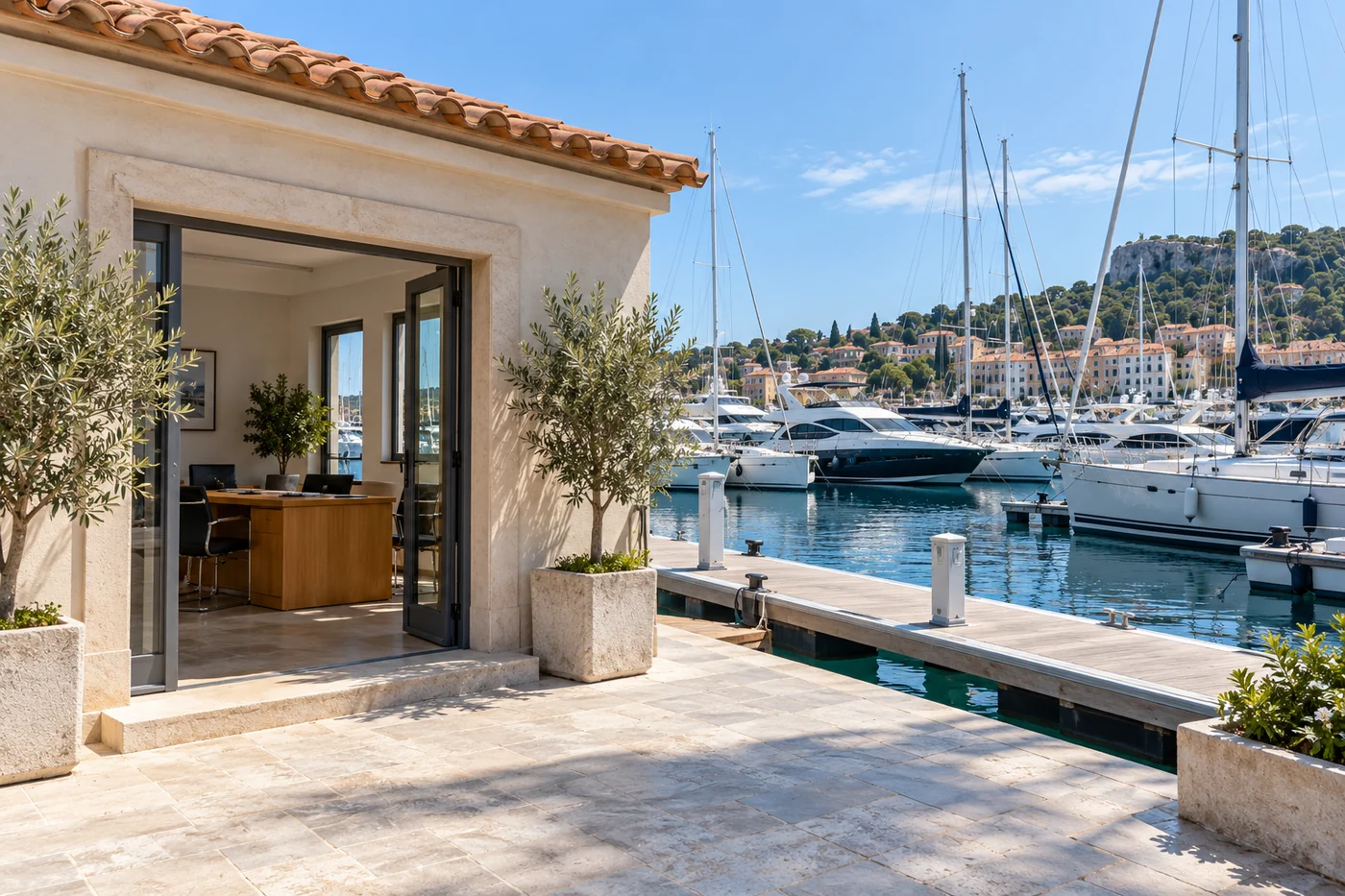
Boat registration at a marina office.
Deposit exposure
Practical support
Peter Mattey is a yacht broker at European Yacht Brokers with a BA in Law. He is not an Italian lawyer: for Italian law and tax we refer you to a locally qualified adviser. What we can do is help you prepare the sale, put the right questions to a buyer and spot gaps in the paperwork before you commit.
If you are selling a boat in Italy, tell us about the boat and where it is through the enquiry form on this page and a broker will reply. For anything this guide does not cover, email us at info@europeanyachtbrokers.com for the latest information.

Written by
Peter Mattey
Yacht Broker, European Yacht Brokers
BA (Law). Expert in marine law

The handover of a boat at the dock.
Your questions
No: the Civil Code places sale-contract and ancillary expenses on the buyer unless the parties agree otherwise. That default should not be treated as proof that every service the seller commissions belongs to the buyer. Our recommendation is to identify each charge and its agreed payer in the contract and budget, obtaining locally qualified legal advice where allocation is uncertain. (Normattiva)
No compulsory percentage is established by Article 1755 as cited here. It recognises commission for a deal concluded through the mediator's intervention and sets out an equitable judicial determination where agreement, tariffs and usage do not settle the amount and allocation. Our recommendation is to agree the charge and payment trigger in writing before instructing a broker. (Normattiva)
Yes: Article 1756 provides an expense-reimbursement entitlement against the person who instructed the expenditure even if the deal is not concluded, unless agreement or usage provides otherwise. Our recommendation is to specify authorised expenditure and approval arrangements separately from commission. That keeps an unsuccessful marketing period from becoming a dispute over services you believed were included in another charge. (Normattiva)
Our recommendation is to wait until the agreed release conditions are satisfied. Article 1385 gives a confirmation deposit specified consequences for performance and default, including a demand for twice the deposit where the receiving party defaults and the other party takes the withdrawal route. Ask a locally qualified lawyer to identify the payment's character and the actual contractual conditions first. (Normattiva)
Our recommendation is to deduct the charges you actually owe from your agreed receipt, using written figures and the contract's allocation rather than a guessed percentage. Article 1475 supplies the default allocation for sale-contract expenses, while the mediation articles address commission and reimbursable expenditure. Keep uncertain tax and administrative amounts separate until the person handling the file confirms the applicable charges. (Normattiva)
This guide does not set transfer taxes, filing tariffs or broker fees, because they depend on the boat and the transaction. Email us at info@europeanyachtbrokers.com for the latest information, and ask each provider for an itemised written quotation.
Ready when you are
Thinking of selling?
Get an honest view on price and how we would market your boat.
Sell your boat ItalyCheck it yourself
Civil Code default allocation of sale and ancillary expenses.
Civil Code commission entitlement and determination.
Civil Code reimbursement of instructed mediation expenses.
Domestic VAT scope for business and professional supplies; text applicable in 2026.
Civil Code confirmation-deposit consequences.
Keep reading
More guides for sellers and buyers: yacht brokers Italy.

More guides for sellers and buyers: yacht brokers Italy.

More guides for sellers and buyers: yacht brokers Italy.
Similar guides

More guides for sellers and buyers: yacht brokers Italy.

More guides for sellers and buyers: yacht brokers Italy.

More guides for sellers and buyers: yacht brokers Italy.
Talk to European Yacht Brokers
Selling a boat in Italy? Tell us about it
Tell us about the boat and where it is and a broker will reply.
More guides for sellers and buyers: yacht brokers Italy.
More guides for sellers and buyers: yacht brokers Italy.