BALANCE
SANLORENZO SL78 Rare opportunity to acquire a Sanlorenzo SL78 at an exceptional value. This yacht has recently completed comprehensive maintenance and is fully serviced, ensuring
THE EYB COUNTRY GUIDES · Croatia
Plan the customs procedure and tax evidence independently of the vessel's flag, then check the intended registration route.
By Peter Mattey · 9 min read · Facts checked 2026-10-03
Importing a boat Croatia involves more than moving the vessel to a Croatian berth. As a practical recommendation, establish its customs status, the planned movement, the buyer's position and the intended register before committing to transport. Ask for the evidence behind each answer. A foreign registration paper identifies one part of the history, but it should not be treated as a complete answer about customs, tax or Croatian registration eligibility.
Croatian Customs separates Union-status evidence from nationality and explains conditions for temporary admission. Its new-means-of-transport guidance addresses a different tax question. The maritime ministry then sets out first-entry documents for boats and yachts. This guide connects those verified sources without inventing a single import percentage, guaranteed clearance period or automatic right to use the seller's existing procedure. For anything this guide does not cover, email us at info@europeanyachtbrokers.com for the latest information.
Key facts at a glance
Customs states that a craft entering the EU customs territory may be subject to customs control.
Croatian Customs Administration — leisure craft ·Ownership, EU registration and flag do not establish Union customs status under the official leisure-craft guidance.
Croatian Customs Administration — leisure craft ·Customs identifies T2L and a qualifying invoice meeting stated conditions as Union-status evidence routes.
Croatian Customs Administration — leisure craft ·The intra-EU new-means-of-transport guidance applies qualifying maritime length, age and sailing-time tests; it is separate from physical arrival in Croatia.
Croatian Customs — VAT on new means of transport ·The ministry's existing-boat first-entry list includes foreign deletion evidence where the vessel transfers from another register.
Croatian maritime ministry — boat registration instructions ·Section 1
Croatian Customs says that a vessel entering the EU customs territory may be subject to customs control. It expressly states that ownership, EU registration and the flag flown do not prove Union customs status. As a practical recommendation, request the relevant customs documents before booking delivery or transport. Ask an adviser or Customs to check them against the vessel's identity and movement history. A familiar European flag should not be presented as a substitute for the evidence the official guidance actually identifies.
The leisure-craft page lists T2L and an invoice meeting specified conditions as documentary routes. Those invoice particulars include the relevant identity, description and T2L information; the page also states certification conditions. As a practical recommendation, have the actual invoice checked rather than assuming every original invoice works. Keep the customs evidence separately labelled from the sales contract and registration record. The documents may relate to the same boat, but they answer different questions and should not be blurred into a generic folder described simply as paperwork.
Where the evidence is incomplete, obtain a transaction-specific decision on the appropriate procedure before treating the boat as ready for delivery. As a practical recommendation, give Customs the actual documents, intended movement and proposed owner or user. This guide does not infer status from a seller's nationality or claim that every used vessel located in an EU marina has the same customs position. It also does not invent a uniform clearance charge: any assessment needs the real vessel, procedure and applicable circumstances.
Broker tip: As a practical recommendation, ask Customs to assess the actual status evidence before arranging transport. Keep the vessel identifiers and document history together so that the enquiry concerns the boat you intend to acquire. Readers often go on to our guide on whether you pay VAT on a boat in Croatia.

Port customs office at a harbour.
Customs control on entry
Section 2
The leisure-craft guidance describes temporary admission for boats without Union customs status under specified conditions. It refers to registration outside the Union customs territory in the name of a person established outside it, and use by a person established outside it. As a practical recommendation, tell Customs the proposed owner's and user's actual position before assuming the route is available. A foreign passport or a non-EU flag alone is not the complete set of conditions described on the official page.
As a practical recommendation, disclose any existing temporary-admission arrangement when planning a purchase or change of use. Ask who is the current procedure holder, what evidence records the arrangement and what Customs requires for the proposed transaction. Do not describe the previous owner's position as automatically transferable. The source explains a conditional procedure; it does not give every future purchaser a general permission. Obtain advice before payment if the vessel's continuing use in Croatia depends on an assumption about the buyer's eligibility.
The current consolidated Union Customs delegated regulation sets eighteen months for discharge of temporary admission of privately used means of sea and inland-waterway transport. That limit does not establish your eligibility or create an automatic renewal after a purchase. As a practical recommendation, ask Customs to confirm when the existing procedure began and how the proposed transaction must be handled. Keep its instructions with the customs file and identify responsibility between buyer, seller and any representative. A boat's registration papers alone do not establish the procedure's remaining period.
Broker tip: As a practical recommendation, disclose the existing customs procedure before buying. Ask Customs to confirm the proposed owner, user and activity against the applicable conditions; do not assume the seller's arrangement continues automatically. Our guide on how to register a boat in Croatia covers a related point.
Passport and boat registration papers on a chart.
Non Union admission route
Looking at a boat in Croatia and want a second opinion before you commit? Speak to one of our brokers.
Section 3
Customs' new-means-of-transport guidance addresses qualifying vessels longer than 7.5 metres, with the stated maritime-use exclusions. A qualifying boat is new under those VAT rules if delivered within three months of first use or if it has not sailed more than 100 hours. As a practical recommendation, collect evidence of first use and sailing time before relying on the word used in an advert. These are tax tests for the described category, not a universal definition covering every physical move or every newly bought craft.
For the qualifying intra-EU acquisition, the guidance applies the destination principle where dispatch or transport to the acquirer ends. It states that the acquirer is liable regardless of VAT registration, then distinguishes the relevant declaration and payment routes. As a practical recommendation, describe the buyer's tax position and delivery plan accurately when seeking advice. An invoice issued in another member state does not by itself establish that no destination obligation exists. Conversely, an arrival from a third country requires its own analysis rather than this intra-EU rule being copied without thought.
The Customs page uses the Stjecanje NPS form and requires an invoice or sale-contract copy, plus the registration-document copy if available. It distinguishes the authority's payment decision for non-VAT-registered acquirers from the declaration certificate for VAT-registered acquirers when describing registration evidence. As a practical recommendation, coordinate the required tax papers with the intended registrar before completion. This guide does not calculate an import bill from a boat's asking price or assume that every case uses the same evidence or payment sequence. No current vessel-specific customs ruling, import-duty calculation, VAT assessment or technical acceptance was obtained. Confirm current requirements with Customs, the intended registrar or a qualified adviser. For these, email us at info@europeanyachtbrokers.com for the latest information.
Broker tip: As a practical recommendation, ask a qualified adviser to separate third-country import treatment from intra-EU new-transport VAT. Give them first-use records, sailing time, invoice details and the actual destination plan. A related question is answered in our guide on whether you need a boat licence in Croatia.

Model yacht beside a calculator for boat tax costs.
Maritime qualifying category
The new-transport guidance covers vessels longer than 7.5 metres subject to its stated maritime-use exclusions.
Source: Croatian Customs — VAT on new means of transportA qualifying vessel is new if delivered within three months of first use OR if it has not sailed more than 100 hours.
Source: Croatian Customs — VAT on new means of transportThe qualifying acquisition is taxed where dispatch or transport to the acquirer ends, regardless of the acquirer's VAT registration.
Source: Croatian Customs — VAT on new means of transportThe guidance identifies Stjecanje NPS and supporting invoice or contract evidence, with a registration copy where available.
Source: Croatian Customs — VAT on new means of transportCustoms distinguishes the payment decision for non-VAT-registered acquirers and the declaration certificate for VAT-registered acquirers for the stated registration route.
Source: Croatian Customs — VAT on new means of transportSection 4
The ministry's first-entry list for an existing boat includes ownership, registration eligibility, age and technical documents, foreign deletion evidence where it transfers from another register, and user-status evidence where relevant. As a practical recommendation, ask the intended harbourmaster to apply that list to the actual craft before arranging the move. The instructions describe qualifications for certain EU-market and previously unregistered boats, so an absent foreign deletion paper is a question to resolve rather than an automatic reason to omit technical evidence.
If ownership is acquired through a legal transaction, the boat instructions require it in writing with the certified signature of the person whose right transfers. The ministry also requires the stated power of attorney for foreign owners. As a practical recommendation, coordinate signing, representation and delivery of originals before completion, especially if the parties are in different countries. Electronic filing does not remove the originals required for documents forming the basis of entries in register Sheets B and C. Ask the receiving office how the complete package should reach it.
Yachts have their own first-entry instructions and technical documentary distinctions, including requirements for existing yachts up to 24 metres. As a practical recommendation, confirm whether the vessel is treated as a boat or yacht and which authority must establish its technical acceptability. A previous registration or a seller's conformity claim should not be converted into a guarantee of Croatian acceptance. Obtain a clear response before your budget depends on immediate navigation after arrival. Confirm current requirements with the relevant authority or a qualified adviser.
Broker tip: As a practical recommendation, obtain the registrar's document and technical checklist before moving the boat. Coordinate foreign deletion, certified ownership evidence and original delivery with the seller while those matters can still be resolved. See also our guide on what safety equipment a boat must carry in Croatia.
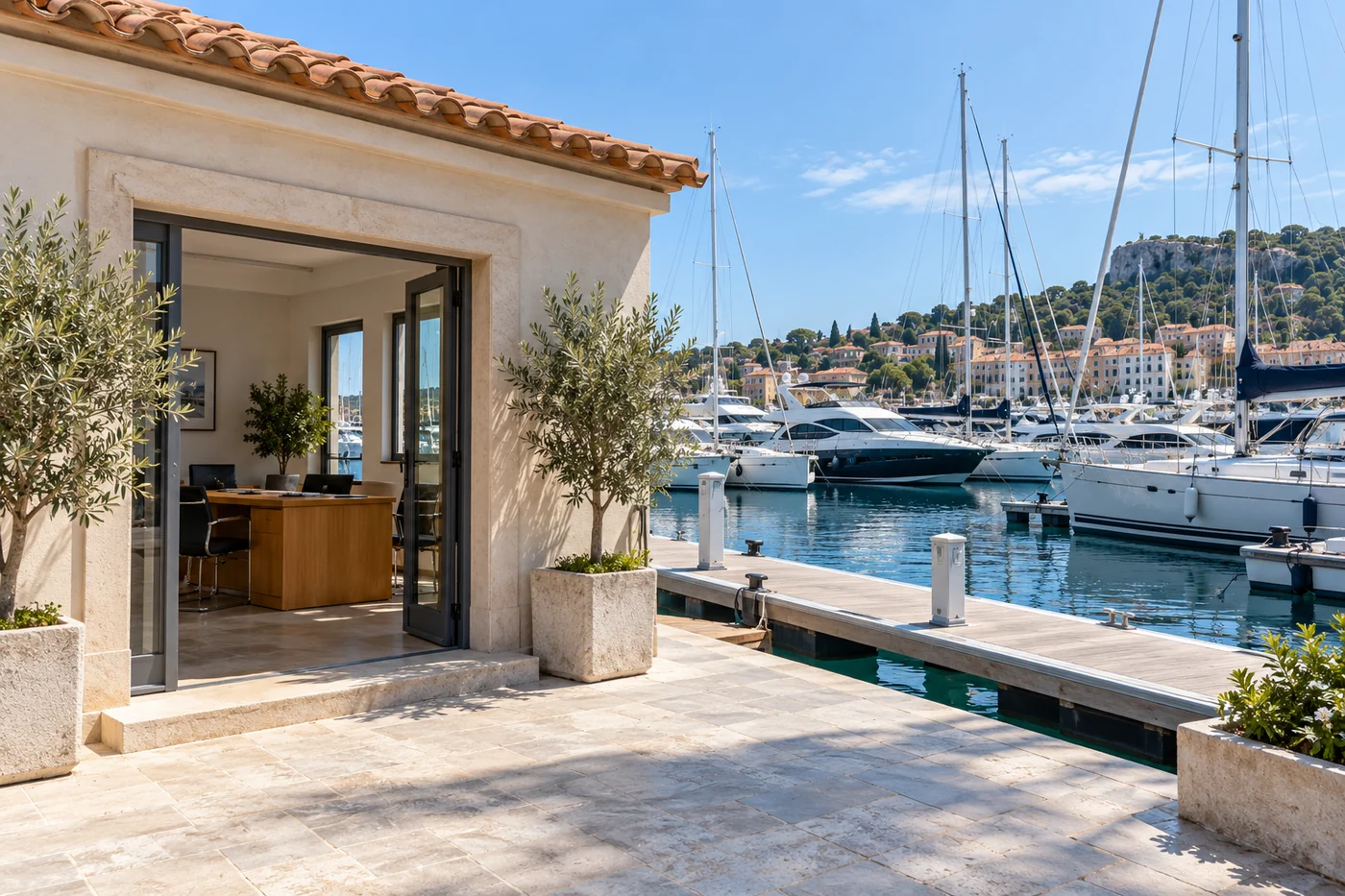
Boat registration at a marina office.
Existing boat entry list
Practical support
Peter Mattey is a yacht broker at European Yacht Brokers with a BA in Law. He is not a Croatian lawyer: for Croatian law and tax we refer you to a locally qualified adviser. What we can do is help you plan the purchase, put the right questions to the other side and spot gaps in the paperwork before you commit.
If you are looking for a boat in Croatia, tell us the type of boat, your budget and the area through the enquiry form on this page and a broker will reply. For anything this guide does not cover, email us at info@europeanyachtbrokers.com for the latest information.

Written by
Peter Mattey
Yacht Broker, European Yacht Brokers
BA (Law). Expert in marine law

The handover of a boat at the dock.
Your questions
No: Croatian Customs expressly distinguishes the flag and EU registration from Union customs status. Its leisure-craft guidance identifies separate documentary proof routes. As a practical recommendation, ask Customs or a qualified adviser to examine the actual evidence and movement history before planning delivery, rather than relying on the flag or the boat's present location in an EU marina. (Croatian Customs Administration — leisure craft)
Do not assume that it continues automatically. The official page describes a conditional route involving registration, establishment and use outside the Union customs territory. As a practical recommendation, disclose the present procedure and your proposed ownership and use to Customs before completion. Ask it to identify the appropriate procedure for the actual transaction instead of treating the seller's position as a transferable entitlement. (Croatian Customs Administration — leisure craft)
Yes: a vessel within the qualifying maritime category can meet either the three-month first-use test or the no-more-than-100-sailing-hours test. The advert's description is not the tax classification. As a practical recommendation, collect first-use evidence and sailing-time records and ask the relevant authority or a qualified adviser to assess the intra-EU acquisition before relying on its treatment. (Croatian Customs — VAT on new means of transport)
The ministry requires it where the boat transfers from a foreign register and describes qualifications for certain EU-market or previously unregistered cases. It is therefore a vessel-history question rather than one rule to repeat without conditions. As a practical recommendation, give the receiving harbourmaster the actual registration history and ask which deletion or alternative technical documents it requires. (Croatian maritime ministry — boat registration instructions)
No: the ministry retains an original-document requirement for papers forming the basis of Sheets B and C entries. As a practical recommendation, arrange their physical delivery alongside any electronic application and keep copies for your own file. Ask the receiving office to identify precisely which originals and other certified copies are needed for the actual first-entry route. (Croatian maritime ministry — boat registration instructions)
This guide only includes facts checked against official sources. For anything it does not cover, email us at info@europeanyachtbrokers.com for the latest information, and ask a locally qualified adviser to confirm the position for your own boat.
Ready when you are
SANLORENZO SL78 Rare opportunity to acquire a Sanlorenzo SL78 at an exceptional value. This yacht has recently completed comprehensive maintenance and is fully serviced, ensuring
SANLORENZO SL96A Delivered in July 2023, JICJ represents a rare opportunity to acquire a brand‑new Sanlorenzo from the acclaimed Asymmetric series. Featuring modern design, premium

SUNREEF 60 POWER ECO Meet the 60 Sunreef Power ECO-ELECTRIC—a standout in luxury yachting, blending comfort, performance, and eco-friendly innovation. With a generous 268 m²
Check it yourself
Opened official distinction between vessel nationality and Union customs status, and temporary admission conditions.
Opened current official maritime thresholds, destination rule, declarations and registration evidence.
Opened current official instructions for existing boats, register changes, insurance and technical inspections; cites register ordinance NN 131/23 and 142/23.
Opened official yacht eligibility, documentary evidence and register sheet guidance.
Current consolidation dated 1 July 2026 linked by EUR-Lex CELEX 02015R2446-20260701; full official text opened and Article 217(e) verified. Temporary-admission period, distinct from VAT and individual eligibility.
Keep reading
Talk to European Yacht Brokers
Looking for a boat in Croatia? Tell us what you need
Tell us the type of boat, budget and area and a broker will reply.