THE EYB COUNTRY GUIDES · Croatia
Prepare title evidence, agree the written terms and coordinate payment, delivery and the buyer's register application.
By Peter Mattey · 9 min read · Facts checked 2026-10-03
Sell a boat privately Croatia means managing the sale directly while keeping the vessel's legal and practical handover clear. The seller needs to establish who owns the boat, disclose relevant title restrictions and agree what the buyer will receive. This guide connects the Ministry's registration instructions with the Civil Obligations Act's sale and delivery rules, so the parties can prepare a documented transaction rather than rely on an advertisement and exchange of keys.
The guide is for private owners and their buyers. It covers title preparation, written price and inventory terms, coordinated inspection and handover, and the register follow-through. Practical suggestions are recommendations. A locally qualified lawyer should assess the individual contract, any unresolved rights and the buyer's chosen registration route. For anything this guide does not cover, email us at info@europeanyachtbrokers.com for the latest information.
Key facts at a glance
Civil Obligations Act Article 430 makes the seller responsible for third-party rights restricting the buyer's right where the buyer was not informed and did not accept the burden.
Narodne novine — Civil Obligations Act, updated 17 Mar 2005 ·The Ministry states that an ownership-acquisition legal transaction must be written with a certified signature of the person whose right is transferred.
Ministry of the Sea, Transport and Infrastructure — boat instructions ·Civil Obligations Act Article 397 provides the stated simultaneous payment-and-delivery default and the buyer's opportunity to inspect, unless otherwise agreed or customary.
Narodne novine — Civil Obligations Act, updated 17 Mar 2005 ·The Ministry requires a boat's new owner to request the register change within 30 days of acquiring ownership.
Ministry of the Sea, Transport and Infrastructure — boat instructions ·Documents supporting Sheet B and Sheet C entries must be submitted as originals; other documents can be notarised copies, and supporting originals cannot be replaced by emailed scans.
Ministry of the Sea, Transport and Infrastructure — boat instructions ·Section 1
Begin with the registered vessel and the person selling it. The Ministry's e-Vessel description separates technical information, ownership and encumbrances into different register sheets. Our recommendation is to compare the owner's identity with the sale documents and inspect the encumbrance information before accepting an offer. A familiar boat name or a seller's possession of the keys does not replace that comparison. Keep the register information with the transaction file and ask a locally qualified lawyer to resolve inconsistencies before taking payment.
Ownership and charges are different checks. Sheet B provides ownership information, while Sheet C contains encumbrances and notices, including the restrictions listed in the Ministry's guidance. Our recommendation is to identify any creditor, charter arrangement or restriction affecting the proposed sale and agree how it will be resolved. Do not describe the vessel as free of charges merely because the seller has paid the marina. Harbour invoices concern a different relationship and do not establish the absence of registered rights.
The Civil Obligations Act makes the seller responsible for undisclosed third-party rights that exclude, reduce or restrict the buyer's rights where the buyer has not accepted the burden. That gives a direct seller a reason to disclose title issues before the agreement is made. Our recommendation is to attach the identified restrictions and proposed clearance documents to the sale file. A statement in an advertisement should be supported by the actual title position, rather than a promise that paperwork can be corrected after handover.
Broker tip: Our recommendation is to prepare a title file before advertising, with the registered owner, vessel identity and identified charges. Ask the lawyer to resolve discrepancies and document clearance before the sale moves to payment. A related question is answered in our guide on whether to use a yacht broker or a dealer in Croatia.
Boat on a marina berth being prepared for sale.
Technical register sheet
Section 2
A direct sale still needs a clear exchange: the seller transfers the boat to the buyer and the buyer pays the agreed price. The Ministry states that a legal transaction establishing vessel ownership must be in writing with the certified signature of the person whose right is transferred. Our recommendation is to have a locally qualified lawyer prepare or review the document for the registered category and transaction. Signature certification and the content of the agreement are separate matters, so plan both.
The Civil Obligations Act requires a stated or determinable price for an ordinary sale; its separate commercial default should not be borrowed to rescue an incomplete private agreement. Our recommendation is to write the actual currency, amount, payment route and any agreed retention for unresolved work. Distinguish a negotiated price from an asking price or an offer conditional on inspection. This guide does not invent a customary deposit percentage, automatic refund rule or payment deadline for privately negotiated boat sales.
Delivery also belongs in the agreement. The Act requires the seller to deliver at the agreed time and place, and it normally calls for the thing in proper condition with its accessories unless otherwise agreed or arising from the transaction's nature. Our recommendation is to attach an inventory recording what will remain aboard and what the seller will remove. Identify any agreed repair, excluded equipment and inspection condition in the actual contract, rather than leave those matters in an advertisement or informal conversation.
Broker tip: Our recommendation is to finalise the inventory and inspection conditions before arranging certified signatures. Ask the lawyer to align the payment terms with the delivery event so the written agreement reflects what both parties intend. See also our guide on what a yacht broker agreement in Croatia should say.
Tablet showing a boat valuation beside a model yacht.
Basic sale exchange
Selling a boat in Croatia and want help with the plan? Speak to one of our brokers.
Section 3
The Act's default links payment and delivery: unless otherwise agreed or customary, the seller need not deliver without simultaneous payment or readiness to pay, while the buyer need not pay before having an opportunity to inspect. Our recommendation is to agree a practical completion procedure reflecting that rule and any inspection condition. Identify who verifies payment and who releases the boat and documents. A seller should not rely on an unexplained payment image or assume that sending keys establishes the entire transaction.
Risk of accidental loss or damage ordinarily stays with the seller until delivery and passes to the buyer with delivery, subject to the Act's stated exception. Our recommendation is to record the actual handover event and coordinate cover with the insurers using the contract. The advertised sale date, payment instruction and physical release can occur at different moments. Keeping them clear helps both parties identify responsibility without inventing a universal insurance-transfer rule or assuming the seller's policy automatically continues for the buyer.
The Act also divides default costs: delivery and preceding costs fall to the seller, while removal and subsequent costs fall to the buyer unless agreed otherwise. If transport is required and no place of performance is agreed, its carrier-delivery rule becomes relevant. Our recommendation is to state who arranges towing, lifting or transport and which event counts as delivery. A collection alongside the berth and a dispatched boat are different arrangements that should be reflected in the final agreement. No official customary private-sale deposit percentage, advertising cost or completion timetable was verified. This guide does not determine VAT treatment or summarise all current physical-defect remedies; the individual transaction needs separate assessment. For these, email us at info@europeanyachtbrokers.com for the latest information.
Broker tip: Our recommendation is to use a signed completion record covering the boat, inventory, documents and payment confirmation. Identify the delivery event explicitly and send it to both insurers where a change of cover is being arranged. Readers often go on to our guide on what goes in a boat sale contract in Croatia.
Signing a boat purchase agreement.
Simultaneous exchange default
Civil Obligations Act Article 397 provides the stated simultaneous payment-and-delivery default and the buyer's opportunity to inspect, unless otherwise agreed or customary.
Source: Narodne novine — Civil Obligations Act, updated 17 Mar 2005Civil Obligations Act Article 378 ordinarily places accidental loss or damage risk on the seller until delivery and on the buyer after delivery, subject to its stated exception.
Source: Narodne novine — Civil Obligations Act, updated 17 Mar 2005Civil Obligations Act Article 396 assigns delivery and preceding costs to the seller and removal and subsequent costs to the buyer unless otherwise agreed.
Source: Narodne novine — Civil Obligations Act, updated 17 Mar 2005Civil Obligations Act Article 394 treats handover to a carrier or forwarder as delivery when the contract requires transport and does not specify the place of performance.
Source: Narodne novine — Civil Obligations Act, updated 17 Mar 2005Section 4
The buyer has a register task after acquiring ownership. The Ministry requires the new owner to request the recorded change within 30 days of acquisition, and it gives the previous owner the right to request removal if the buyer does not do so. Our recommendation is to agree who prepares the request and how the seller will receive evidence of filing. Keep the transaction date and the responsible harbour master's office in the completion record rather than assume the signed contract updates the register automatically.
The original-document rules remain relevant even when the application starts electronically. The Ministry requires the documents supporting Sheet B and Sheet C entries as originals, with other documents permitted as notarised copies. Those supporting originals cannot be replaced by an emailed scan. Our recommendation is to arrange their delivery to the competent office before the parties leave the handover meeting. Retain copies for both parties and a record of the route used to deliver the originals for the register application.
Removal from the Croatian register is a separate route, including removal at the owner's request. For a yacht with a mortgage, the Ministry says creditors must consent to removal. Our recommendation is to establish the buyer's proposed registry route before completion and have the lawyer coordinate any creditor clearance and deletion request. The guide does not assume that a private contract erases a mortgage, transfers a berth agreement or supplies the documentary evidence needed for another country's registration.
Broker tip: Our recommendation is to retain filing evidence and agree how the buyer will confirm completion of the ownership change. Resolve any planned deletion and creditor consent before releasing the original documents needed for the chosen route. Our guide on how yacht sale escrow works in Croatia covers a related point.
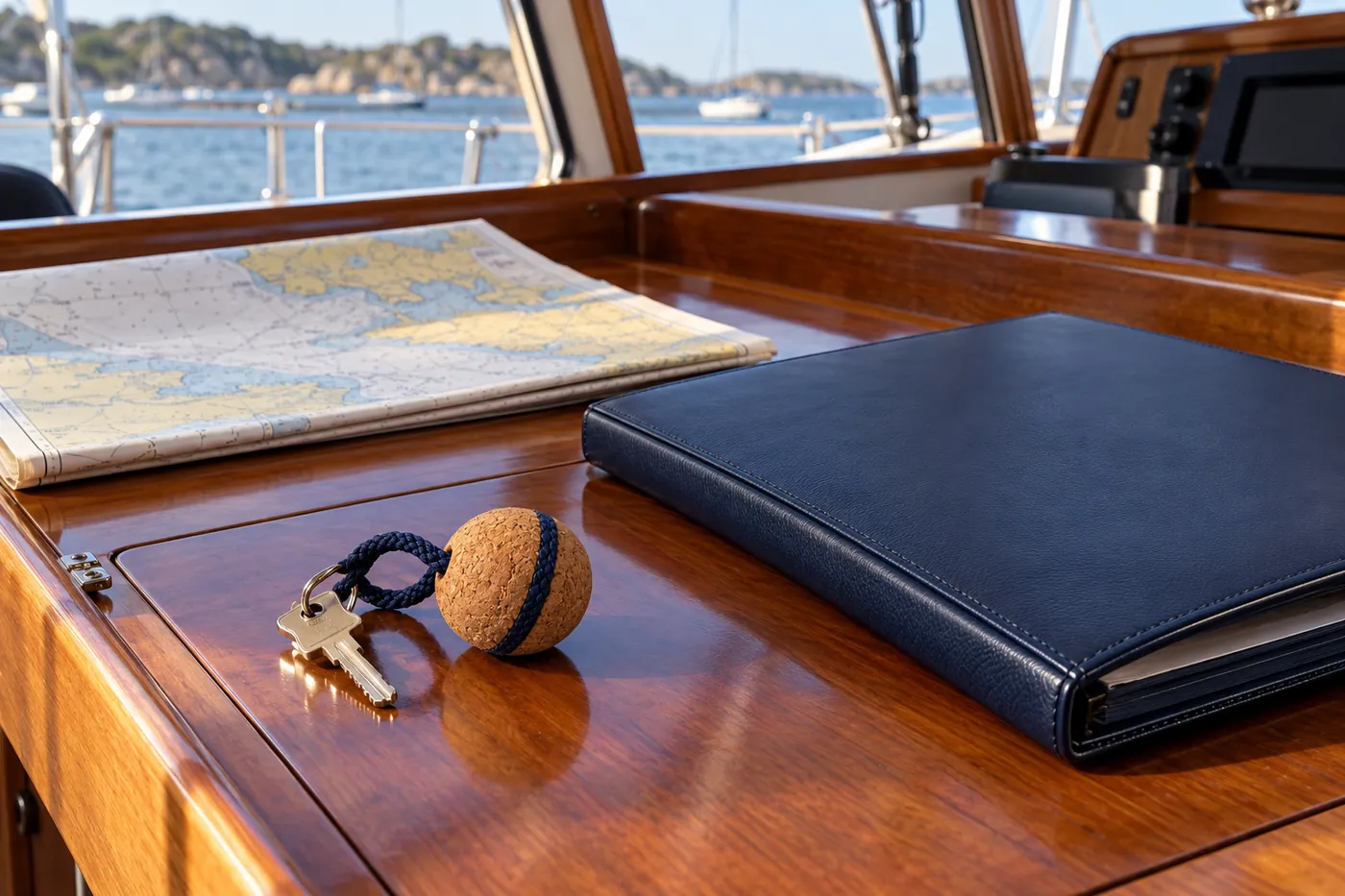
Boat keys and documents handed over on a chart table.
Buyer filing deadline
Practical support
Peter Mattey is a yacht broker at European Yacht Brokers with a BA in Law. He is not a Croatian lawyer: for Croatian law and tax we refer you to a locally qualified adviser. What we can do is help you plan the sale, put the right questions to the other side and spot gaps in the paperwork before you commit.
If you are selling a boat in Croatia, tell us about the boat and where it is through the enquiry form on this page and a broker will reply. For anything this guide does not cover, email us at info@europeanyachtbrokers.com for the latest information.

Written by
Peter Mattey
Yacht Broker, European Yacht Brokers
BA (Law). Expert in marine law

The handover of a boat at the dock.
Your questions
Yes. The Ministry says a legal transaction establishing ownership must be written with the certified signature of the person whose right is transferred. Our recommendation is to have the agreement reviewed for the vessel category and actual transaction, with the price, inventory and handover terms recorded. A private advertisement or an informal exchange of messages should not be treated as the complete ownership document for registration. (Ministry of the Sea, Transport and Infrastructure — boat instructions)
Both parties should obtain the register information as a practical check. The Ministry separates ownership information from encumbrances and notices, and the Act addresses the seller's responsibility for undisclosed third-party rights. Our recommendation is for the seller to prepare that information and for the buyer's lawyer to assess identified restrictions and clearance evidence before completion. Possession of the boat or a settled marina account does not replace that assessment. (Narodne novine — Civil Obligations Act)
The Act's stated default does not require the seller to deliver without simultaneous payment or readiness to pay, unless otherwise agreed or customary. It also gives the buyer an opportunity to inspect before payment under that rule. Our recommendation is to agree the completion procedure in writing, identifying payment verification and release of the boat, so neither party relies on an assumption about the order. (Narodne novine — Civil Obligations Act)
The Act ordinarily places that risk on the seller until delivery and on the buyer after delivery, subject to its stated exception. Our recommendation is to record the delivery event and coordinate the intended cover with the insurers using the actual contract. A payment instruction, the advertised completion date and release of the keys are not automatically a clear record of the same event. (Narodne novine — Civil Obligations Act)
The Ministry gives the previous owner the right to request removal if the new owner fails to request the ownership change within the required period. Our recommendation is to agree filing responsibility at completion and retain the buyer's filing evidence. Where another register is planned, establish the deletion route and any mortgage creditor consent separately, rather than assume the purchase contract alone closes the Croatian register record. (Ministry of the Sea, Transport and Infrastructure — boat instructions)
This guide only includes facts checked against official sources. For anything it does not cover, email us at info@europeanyachtbrokers.com for the latest information, and ask a locally qualified adviser to confirm the position for your own boat.
Ready when you are
Thinking of selling?
Get an honest view on price and how we would market your boat.
Sell your boat CroatiaCheck it yourself
Sale, third-party rights, price, delivery, payment, risk and default costs.
Title sheets, written transfer evidence, original documents and new-owner filing.
Encumbrances and mortgage creditor consent for yacht deletion.
Keep reading
Talk to European Yacht Brokers
Selling a boat in Croatia? Tell us about it
Tell us about the boat and where it is and a broker will reply.